5 benefits admin tasks that should run without you


Automating benefits saves HR teams hours of time on manual admin. But some of it still needs a person.
Benefits admin is a mix of two things: routine processing that follows a rule and decisions that affect what someone gets. Automating it well means knowing which is which.
You don't want your team wasting time on tasks a rule could handle. But you also don't want software making decisions about people's benefits without anyone checking them.
Here are five tasks that should be running without you, how each one works and the things that still need a person.
1. Keeping employee data current
Everything you do depends on this one. Eligibility, deductions, provider headcounts and reward statements all read the same employee record, so when it's out of date everything built on it is wrong at once.
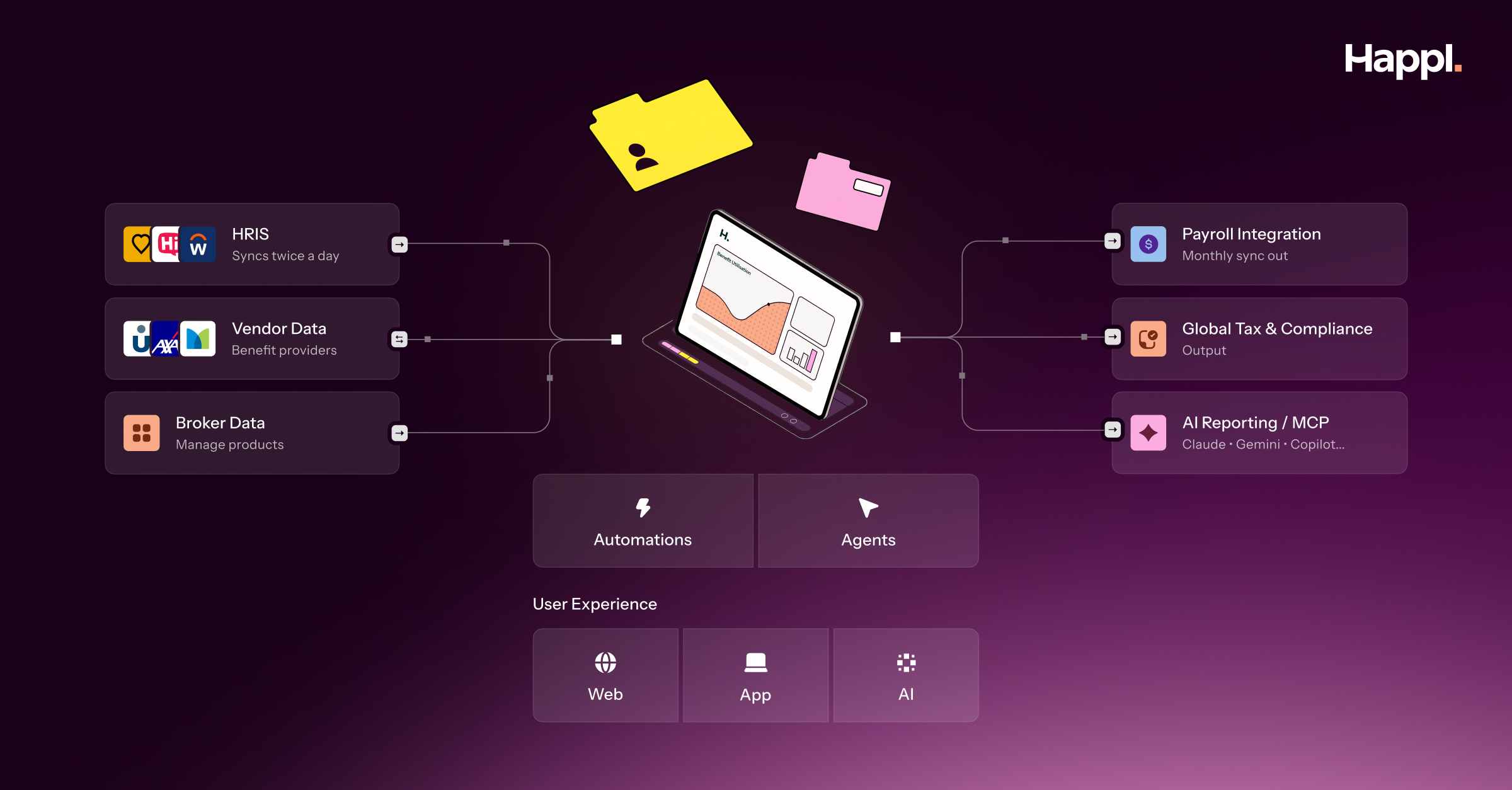
Happl connects to your HR system through an API and reads each record directly, twice a day, across more than 100 HR and payroll platforms. A new starter has their benefits within hours rather than whenever the next file goes over. When someone changes role their eligibility changes with it, and when they leave, their leaving date is picked up from the HR record and their benefits end under each policy's rules, without anyone telling the provider.
Setting it up doesn't need your IT team. You agree once what factors in your employee records affects who gets what, so that someone's country sets their package and their role level sets their tier. The one thing it needs from you is accurate records. If someone's probation end date is missing, Happl has no way of knowing they have become eligible, so their benefits don't appear.
2. Building benefits from your policy documents
This is the task most people don't realise can be automated, and it's the one that takes the most time at setup and at renewal.
An insurer sends a policy document. Someone reads it, works out what the eligibility rules are and translates them into whatever the platform needs. For a multi-country scheme that happens once per market, because each benefit has its own eligibility rules, its own tax treatment and its own provider in the country where it runs. Nobody has ever enjoyed reading a benefits policy document, including the people who write them.
Happl AI builds your eligibility rules from your policy documents, ready for you to check and approve before anything goes live. Configuring a complex policy used to take about a week of back and forth. It now takes a few hours.
What that changes isn't only setup. Adding an entity or a group applies the new policy immediately, so opening in a new country stops being a project.
3. Working out tax and payroll deductions
Every benefit selection has a payroll consequence, and in most organisations somebody works those out by hand each month. This runs on fixed rules, which is what you want for anything that touches someone's pay.
Happl works out the taxable value of each benefit under the rules of the market it sits in, then sends payroll what it needs: taxable benefit values, employee deductions and salary sacrifice amounts. These are not interchangeable. A taxable benefit value is what a benefit adds to someone's taxable pay, an employee deduction comes out of their pay for a benefit they pay for, and salary sacrifice swaps part of their gross pay for the benefit. Payroll, tax and audit reports update automatically rather than being rebuilt each cycle, and the sync out to payroll runs monthly.
Salary sacrifice reduces someone's gross pay, so two or three schemes running at once can push their pay below the minimum wage where one applies. Happl adds up every sacrifice a person has, checks the total against the minimum pay threshold set up for their market, and stops a selection that would take them below it. Doing the same by hand means checking all of someone's schemes together against the threshold where they live, every time anybody changes anything.
4. Getting people enrolled with providers
Telling providers who has joined, changed or left is the part that usually stays manual, with someone logging into portals or emailing spreadsheets at the end of every month.
Happl works with your providers to set up direct connections, so the data flows automatically. Someone joins and their cover starts, someone leaves and it ends on the date their policy says, and nobody on your team has to log in to tell them.
Renewal dates, allowance resets and enrolment windows come through as alerts, so they aren't something you have to remember either.
5. Answering benefits questions
Benefits questions are mostly the same question in different words: what am I entitled to, and how do I use it. They're questions employees should be able to answer themselves, without waiting on a reply from HR.
Employees ask Happl and get an answer about their own cover rather than a link to the handbook. It knows their country, their role and what they have actually chosen, so someone asking about parental leave gets their own entitlement and the policy it came from. Those questions stop reaching your inbox, which leaves you time for the conversations that call for human connection. Someone asking about their income protection because they are about to be signed off work needs extra support, not just the right answer.
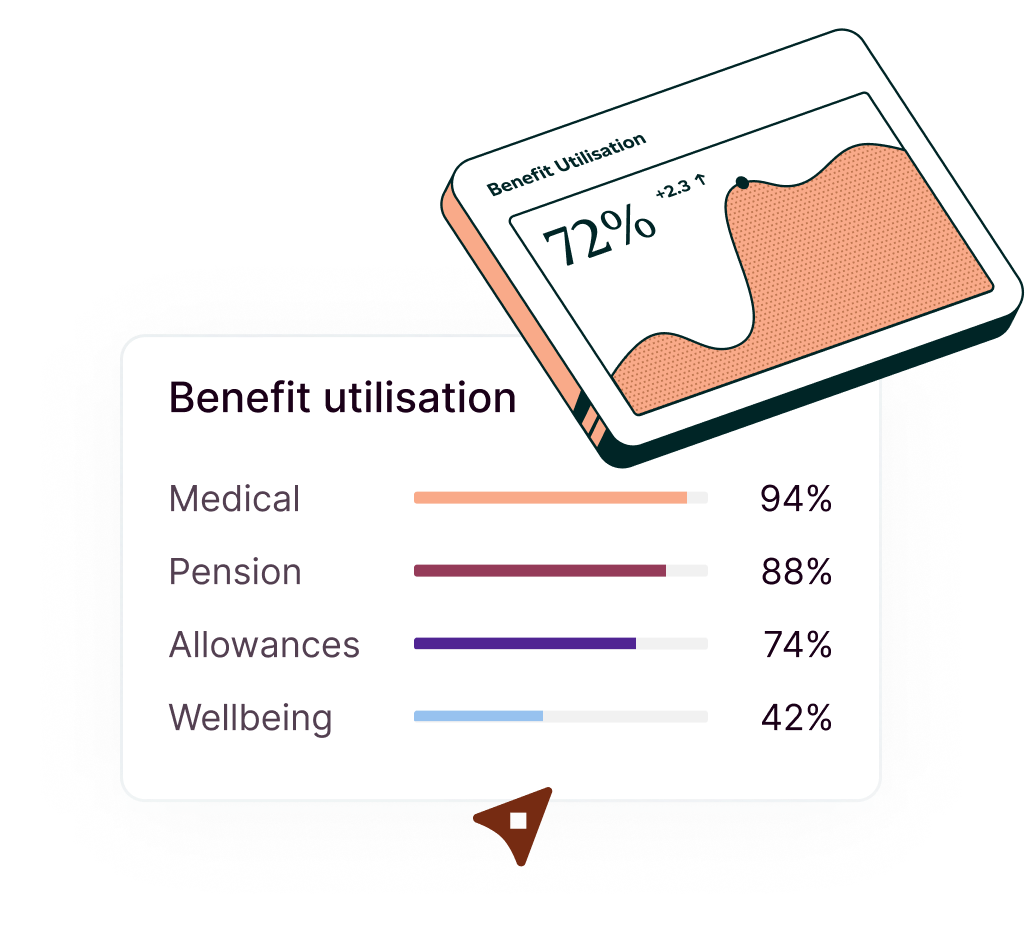
It works in reverse for you too. Inside Copilot, Claude, Gemini or ChatGPT you can ask for a number, such as how many people in Germany took the pension increase or what you spent on wellbeing last quarter, instead of building a report or logging into Happl to find it.
What you still shouldn't automate
Deciding what to offer. A system can tell you take-up on a benefit is 12%. It can't tell you whether that 12% is good or bad. Fertility cover, bereavement leave and mental health support might not get a lot of uptake when you look at a dashboard, but that's because most people don't need them in any given year. They're there when your people do need them. Read those numbers without judgement applied and you will cut the benefits that matter most when difficult moments happen.
Writing the policy, as opposed to running it. A rules engine executes eligibility. It doesn't decide whether the probation exclusion is right, or who gets cover for their family. Those are reward decisions, and they involve an expert view.
Unreviewed AI decisions about money or records. Records and payments can change automatically when the change follows rules you have approved, like a role change moving someone to a new tier or a leaver coming off on the right date. What shouldn't happen is an AI making a call on someone's pay or record that nobody has reviewed. Keeping a person in the approval step isn't caution about the technology. It's that being wrong at speed is worse than being slow. Taking a moment to check AI's output is time well spent.
The conversation when something has gone wrong. A claim has been declined. A benefit didn't cover what someone assumed it would. Someone is dealing with something difficult and needs a person rather than a fast answer.
Being answerable for it. If an eligibility rule is wrong, your name is still against the decision. An audit trail exists so that a person can answer for it, which only works if a person was involved.
Setting it up is the work. Running it shouldn't be.
Nearly all the human input across those five tasks sits at the start: agreeing what in your records decides who gets what, and signing off the rules built from your policy documents. Those decisions need the person who understands your scheme, which is why they stay with you.
What comes after should run without you. Teams running benefits on Happl save 90% of the admin time they used to spend, and that isn't because any single task disappeared. It's because the work between the tasks did: the copying, the chasing, the exporting and the checking that one system still matches another.




Offer true flexibility to your team today
See how Happl runs spend allowances at scale, with eligibility, spend controls and payroll reporting automated across every market you operate in.