How to use AI and technology to run consistent, compliant global benefits


This article was first published by REBA.
A multinational benefits strategy has to do two things at once. Leaders need a clear picture of benefits across the organisation, but each country has different rules, providers and employee needs. So consistency isn’t about offering everyone the same thing (that doesn’t serve your employees well anyway). It’s about knowing what’s offered where, who’s eligible and how those decisions get made.
Most organisations aren’t there yet. In Aon’s 2025 Global Benefits Trends Study, nearly half of companies had a global benefits strategy, but only 25% of global benefits leaders said they had the governance structure to meet their goals.
AI can help you get there and many software providers are adding AI assistants to their products. But an assistant limited to one system can only see part of the picture. For AI to be useful across a multinational workforce, benefits information needs to connect with other systems and reach the tools people already use.
Happl connects your HRIS, payroll and benefits providers in one system, then makes that data available in the AI tools your teams already use.
Consistency: benefits data that stays in sync with every system
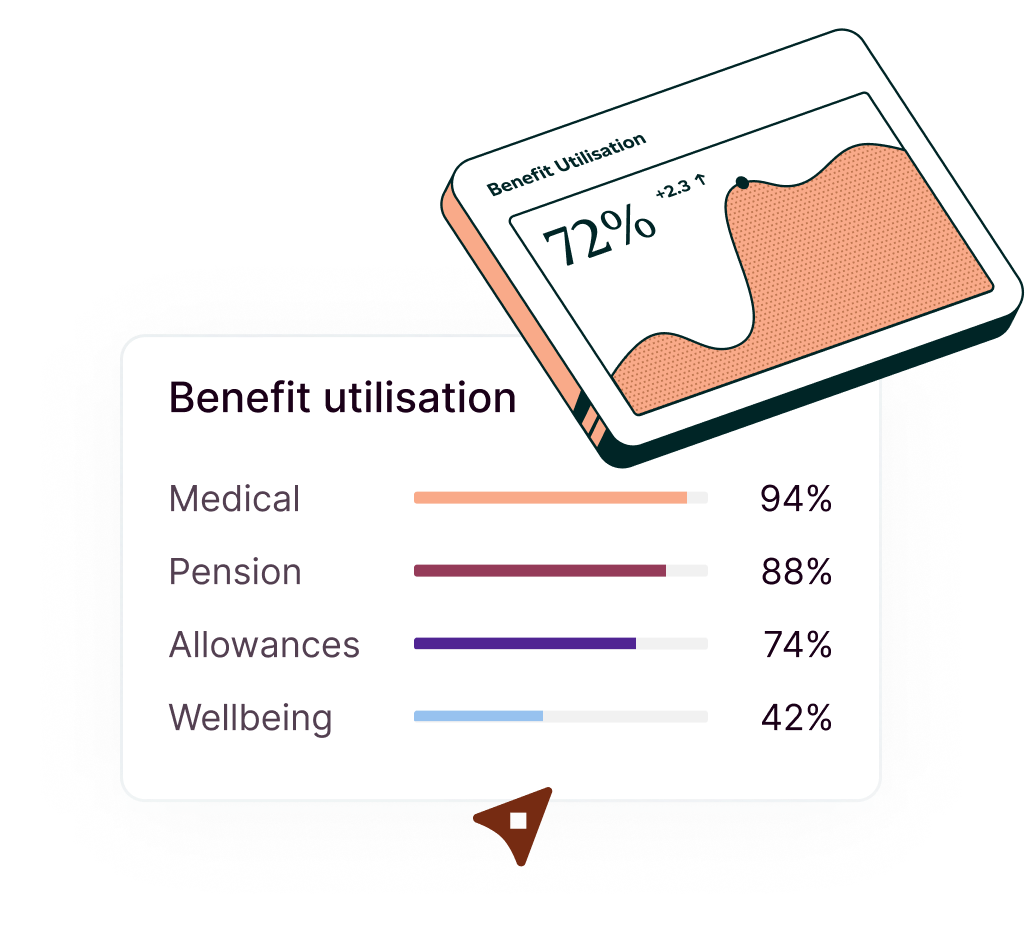
Benefits data sits across HR systems, payroll and providers. When someone joins, leaves or changes role, keeping those records aligned can mean manual updates and reconciliation. Connecting your systems and automatically syncing data reduces that work and gives reward teams a more reliable view of their benefits. Leading companies are twice as likely to centralise their data and decision-making, bringing cost savings and more stable benefits delivery.
That foundation matters for AI, too. An assistant can only answer a benefits question well if it can access current information and apply the relevant country and eligibility rules. Connections like MCP can make that information available through the AI tools people already use, rather than confining it to one platform. An employee might ask about their dental coverage in Glean or Copilot, while a reward lead pulls enrolment data into a quarterly report for finance. Both are working from the same up-to-date, connected records.
How Happl helps: Happl connects to 100+ HRIS and payroll systems with two-way sync, and HRIS data updates twice a day. When someone joins, leaves or changes role, their benefits update without anyone re-keying it. Happl’s MCP connector brings that data into Copilot, Claude, ChatGPT and other MCP-ready assistants. Access follows your existing SSO and permissions, and the connection is read-only, so it can answer questions but can’t change records.
Compliance: rules built around every market you operate in
Running benefits across countries means managing different local requirements and different packages. A rule that works in one market may not work in another or apply to every employee in it. Rather than relying on someone to remember each exception, teams need to see how eligibility has been set up and check it against their policy.
AI can speed up the setup, reading your policy documents and building the rules from them, especially when things get complex. A person always reviews the rules before anything goes live. Once approved, those rules can be applied automatically as you scale and easily checked when policies change.
The EU Pay Transparency Directive shows why this matters. Its definition of pay includes relevant benefits provided in cash or in kind, so employers need to understand which benefits count, how they work and the criteria behind them. When an employee asks why their pay or relevant benefits differ from a colleague’s, you need a clear answer. A good platform gives you a full view of your benefits and the rules behind them, so you’re ready to explain decisions all year round, not just when reports are due.
How Happl helps: Happl AI reads your policy documents and builds the eligibility rules from them, whether they depend on country, entity, role, tenure or salary. Your team reviews the rules before they go live. From then on, every joiner, leaver and role change is checked against the rules for that country, with localised tax and compliance built in across 160+ countries.
Efficiency: connections that remove the wait
Benefits admin often takes longer than the work itself because changes wait on other people. While an employee is left waiting for their new entitlement. When your platform is connected to your other systems, a new joiner or change of role can update eligibility, without HR making the change or chasing providers.
Connections can take time out of the less visible work too. Instead of pulling figures from different systems at month end to check a provider invoice, a reward team can compare it with current enrolment data and spot where the numbers don’t match. AI built into your benefits system and connected to your other tools can help flag those mismatches, so the team spends less time looking for the problem and more time fixing it.
How Happl helps: Because Happl is connected to your HRIS, payroll and providers, enrolments, offboarding and data changes happen automatically. Happl also checks provider headcount against your enrolment data and flags where the numbers don’t match, so you stop paying for people who have already left. Teams using Happl save 90% of their benefits admin time.
AI should make the complex parts easier to manage
Across a multinational workforce, benefits will never be identical. But the data behind them can stay connected, the rules can be clear and changes don’t have to get stuck between teams and systems. That’s where technology and AI earn their place: helping people get the right answer sooner, while giving reward teams the time and visibility to make the decisions that need a person.
Offer true flexibility to your team today
See how Happl runs spend allowances at scale, with eligibility, spend controls and payroll reporting automated across every market you operate in.