Parental leave policy template for UK employers
Employees can take 52 weeks of maternity leave from their first day of work. Since 6 April 2026, paternity leave and unpaid parental leave are day one rights too.
Your policy sets everything that's not covered by law, such as pay above the statutory rate, how far ahead employees need to tell you, how shared parental leave requests are handled and what happens when someone returns to work.
What the law requires
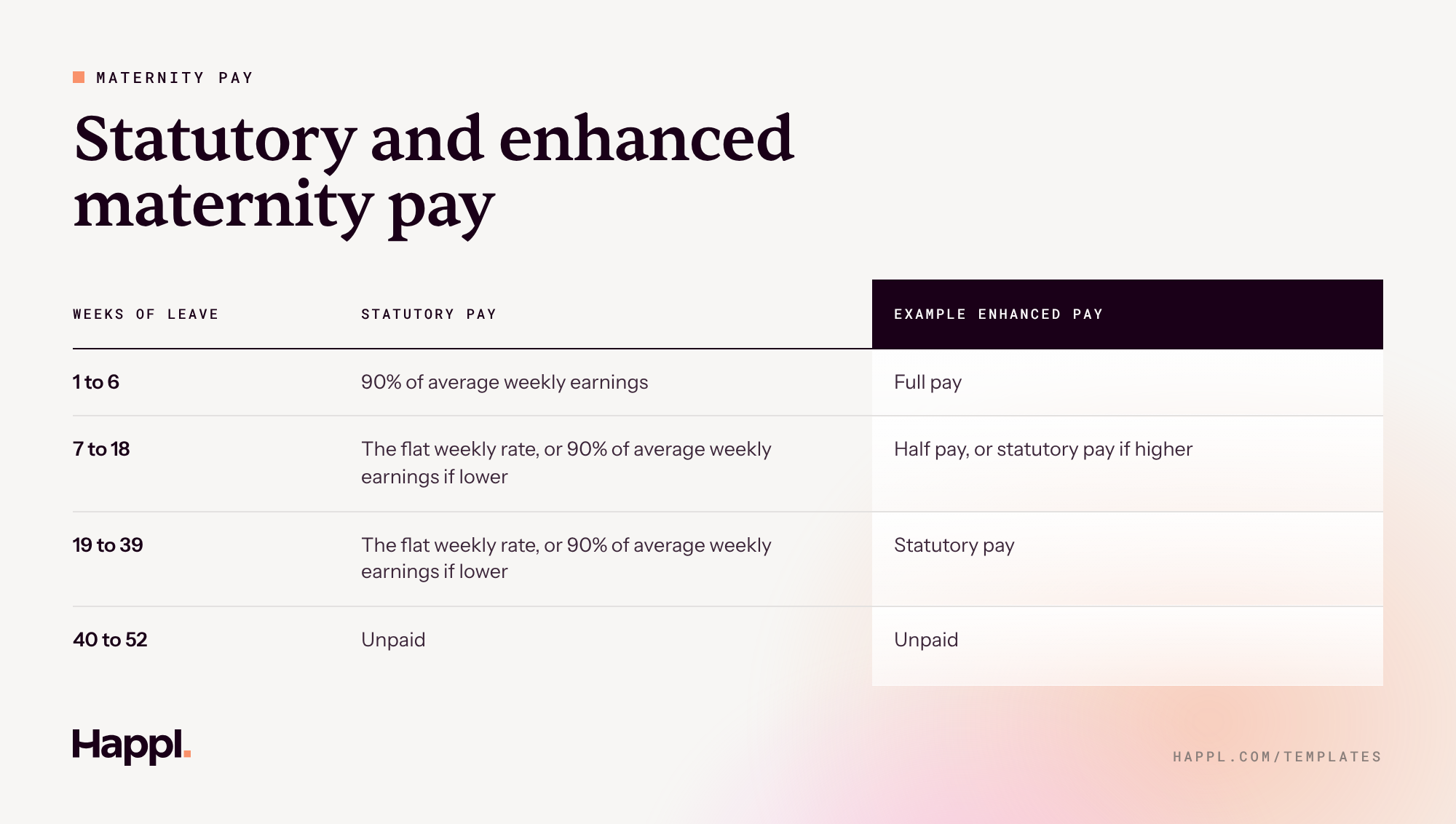
Statutory pay for maternity, paternity, shared parental and adoption leave is 90% of average weekly earnings for the first 6 weeks, then the lower of the weekly flat rate or 90% of average weekly earnings. Check the flat rate on GOV.UK each April.

What changed in April 2026
Three changes took effect on 6 April 2026.
- Paternity leave starts on day one. It applies to babies born on or after 6 April 2026 and to adoption placements starting on or after that date. Employees still need 26 weeks' continuous service to get statutory paternity pay.
- Unpaid parental leave starts on day one. It used to need one year's service.
- Paternity leave can follow shared parental leave. The rule that stopped employees taking paternity leave or pay after shared parental leave has gone.
If your current policy only gives paternity leave after a length of service, you'll need to update it.
Statutory or enhanced pay
Statutory pay is the minimum. Many employers top it up, and your policy is where you say by how much and for how long. The table below shows statutory maternity pay alon
A clawback clause asks someone to repay the enhanced part of their pay if they leave within a set time of returning. It has to be in writing and agreed before the leave starts, and it can only recover the enhanced part. Statutory pay is never repaid.
Maternity leave
Employees can take 52 weeks of maternity leave from their first day of work, and up to 39 weeks of it is paid if they qualify.
An employee can start maternity leave up to 11 weeks before the week the baby is due. They have to take at least two weeks off after the birth, or four if they work in a factory. They need to tell you at least 15 weeks before the due week, and give you at least 8 weeks' warning if they want to change their return date. While they're away, they keep building up holiday and keep the right to come back to their job.
The law leaves leave you to decide on these:
- Notice. Who employees tell, in what form and by when.
- Appointments and risk. How antenatal time off and the health and safety risk assessment work.
- Keeping in touch. How contact during leave is agreed and what keeping in touch days involve.
- Holiday and benefits. What carries on during leave.
- Return. How returning early or changing the return date works.
Paternity leave
Eligible employees get up to 2 weeks of paternity leave from their first day of work when the baby is born on or after 6 April 2026.
An employee needs to tell you the due date at least 15 weeks before the baby is due, and give you 28 days' warning if they want to change their start date.
Leave can start on the day of the birth or later and must be taken within 52 weeks. They can take it as one two week block or as two separate weeks, and can now take it after shared parental leave too. To get statutory paternity pay, they still need 26 weeks' service.
What's up to you:
- Who counts. Fathers, partners of the mother or adopter including same sex partners, adopters and intended parents in a surrogacy arrangement.
- Booking the leave. Who employees tell and how, when they choose their dates.
- Pay. Statutory only, or enhanced, and whether pay depends on service.
Shared parental leave
Parents can share up to 50 weeks of leave and up to 37 weeks of pay in the first year after the birth or placement.
It works by the mother or adopter ending their maternity or adoption leave early. The weeks they don't use can then be shared between both parents, all in one go or in blocks with work in between.
Employees tell you their dates in writing at least 8 weeks before, and give the same warning for any change. You can ask for evidence, such as the birth certificate, within 14 days of their request. They then have 14 days to send it.
Your policy sets out:
- How to ask. Who receives the notice and what evidence you need.
- How you reply. Who responds to a request and how changes are agreed.
- Pay. Statutory only, or whether any enhanced pay applies to shared parental leave.
Adoption leave
Employees who adopt get 52 weeks of adoption leave, and up to 39 weeks of pay if they have 26 weeks of continuous service by the week they were matched.
An employee needs to tell you within 7 days of being matched with a child. Their leave can start up to 14 days before the child comes to live with them. If they're adopting from overseas, it starts when the child arrives in the UK or within 28 days of that. For surrogacy, it starts on the day the child is born or the day after.
Some situations aren't covered by the statutory right, such as adopting a stepchild or family member, private adoption, special guardianship and kinship care.
You decide:
- Who it covers. Adoption, foster to adopt and surrogacy, and who falls outside the statutory right.
- Telling you and proof. Who employees tell once they're matched, and whether you ask to see the matching certificate from the adoption agency.
- Pay. Whether adoption pay matches your maternity pay.
Unpaid parental leave
Eligible employees can take 18 weeks of unpaid leave for each child up to the child's 18th birthday, and since April 2026 they don't need any service to qualify.
Any employee who is a parent can take unpaid parental leave. That means they're named on the child's birth or adoption certificate, or have legal responsibility for the child. Agency workers and contractors can't take it.
They can take up to 4 weeks a year for each child, in whole weeks, unless you agree otherwise or the child is disabled. They need to tell you 21 days before they want to start.
Your policy covers:
- How to ask. Who employees tell and what dates they give.
- Limits. The 4 week yearly cap and whether you allow leave in single days.
- Delays. When you can postpone a request and how you tell the employee.
What is coming in 2027
Two changes in the Employment Rights Act 2025 will affect parental leave policies in 2027. Neither has a confirmed date yet, so plan for them without treating the timing as fixed.
- Dismissal protection for pregnancy and return from leave. A new framework is due to protect employees who are pregnant, on maternity leave or within six months of returning, with set exceptions. Other family leavers are expected to be covered too.
- A new flexible working framework. An employer could refuse a request only on a statutory ground and only if refusing is reasonable.
Build a review date into your policy so these can be added once the dates are set.
FAQ
What is the difference between maternity, paternity, shared parental and adoption leave?
Maternity leave is 52 weeks for the person giving birth. Paternity leave is up to 2 weeks for their partner, adoption leave is 52 weeks for the adopter, and shared parental leave lets parents split up to 50 weeks between them.
Who qualifies for paternity leave since April 2026?
Employees qualify from their first day of work when the baby is born on or after 6 April 2026. Paternity pay still needs 26 weeks of continuous service.
What is unpaid parental leave and who can take it?
It is up to 18 weeks of unpaid leave for each child up to their 18th birthday, with a limit of 4 weeks a year. Employees named on the birth or adoption certificate or with parental responsibility can take it from day one.
Can an employer offer more than statutory parental pay, and should it include a clawback?
Yes, the statutory rate is the minimum and the policy sets anything above it. A clawback clause can recover the enhanced part of pay if someone leaves within a set time of returning, but it has to be in writing and agreed before the leave starts.
How does shared parental leave work for an employer?
Employees give at least 8 weeks' written notice of their leave dates. You can ask for evidence such as the birth certificate within 14 days, and they have 14 days to provide it.
What notice do employees have to give for each type of leave?
Maternity and paternity leave need at least 15 weeks' notice before the due week. Adoption leave needs notice within 7 days of being matched, shared parental leave at least 8 weeks and unpaid parental leave 21 days.
What happens to holiday and benefits during parental leave?
Employees keep building up holiday during maternity leave, and their right to return to their job is protected. Your policy should say which other benefits carry on.
What changes in 2027 for pregnant employees and people returning from leave?
A new dismissal protection framework is expected to cover employees who are pregnant, on maternity leave or within six months of returning. The date is not confirmed.



Offer true flexibility to your team today
See how Happl runs spend allowances at scale, with eligibility, spend controls and payroll reporting automated across every market you operate in.