Working abroad policy template for UK employers
More employees are asking to work from another country for a while, often to stretch a holiday or spend time with family. For a short stay, it's usually simple to agree.
The longer someone stays, the more likely they are to owe tax in that country, need a visa or come under its employment law. A policy with a clear limit and a simple approval process lets you say yes with confidence and know when to say no.
What to check before saying yes
How long is too long
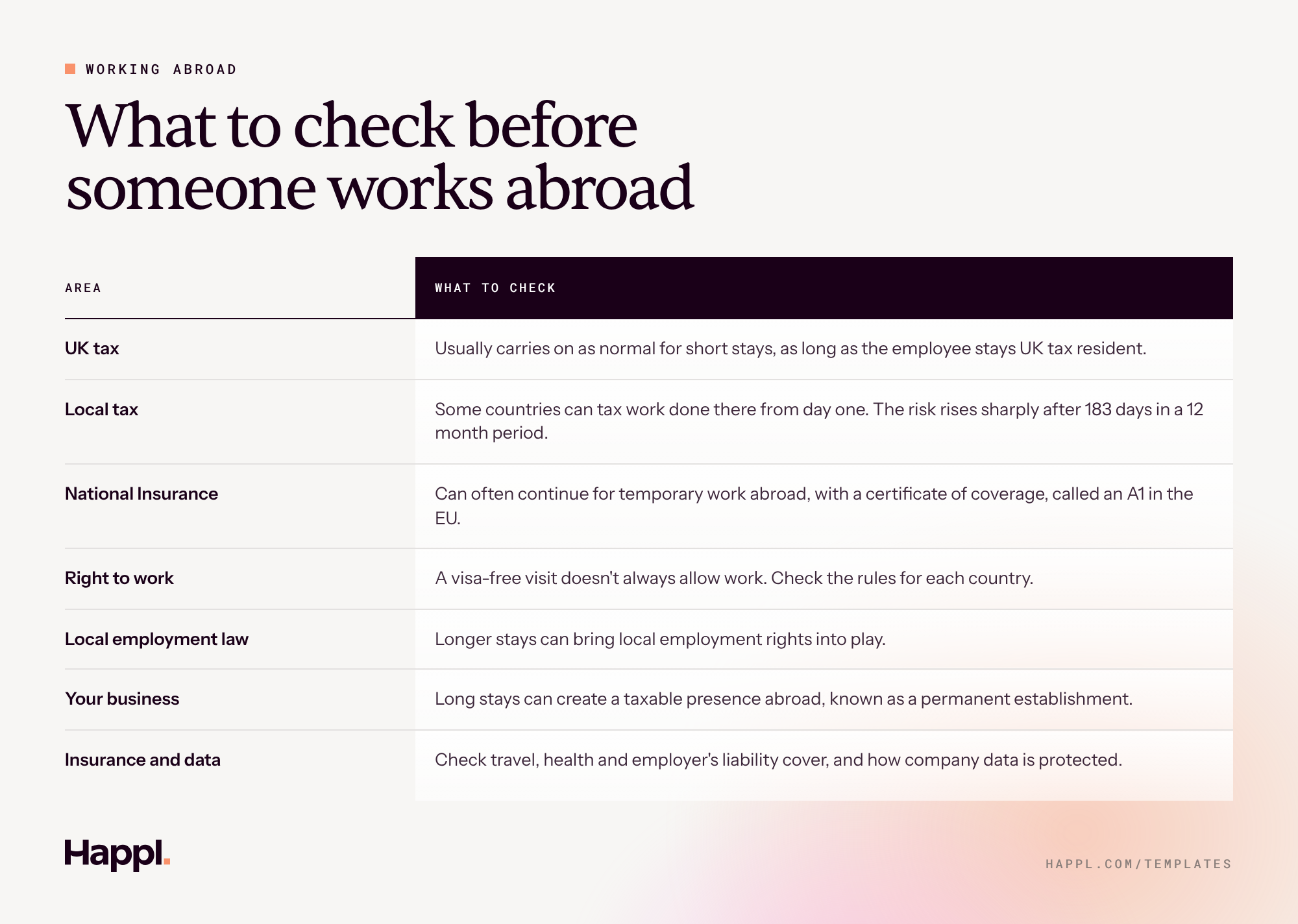
There's no single safe number. Many countries can tax someone who spends more than 183 days there in a 12 month period. Most tax treaties use the same 183 day test. Some countries expect tax or registration from the first day of work and visa rules can be stricter still.
That's why employers usually set a limit well below 183 days and look at anything longer case by case. Holiday days count too, because tax and visa rules count the days someone is in the country, not just the days they work.
Tax and National Insurance
For a short stay, an employee who stays UK tax resident usually keeps paying UK tax through payroll as normal. The other country may still have a right to tax work done there. Where a tax treaty exists, it decides which country taxes first.
National Insurance follows separate rules. For temporary work in the EU and some other countries, employees can often stay in the UK system with a certificate of coverage from HMRC. In the EU, this isn't possible for arrangements expected to last more than two years.
Visas and right to work
A UK passport lets people visit many countries without a visa, but visiting and working aren't the same thing. Some countries allow remote work for a UK employer during a visit, some don't, and some offer digital nomad visas.
In the Schengen area, UK citizens can stay for up to 90 days in any 180 without a visa. That limit is about time spent there. It doesn't give permission to work, so check each country's rules before you agree.
FAQ
Can a UK employee work from another country?
Yes, if you agree to it and the other country's rules allow it. Short stays are usually simple. Longer ones need checks on tax, visas and local employment law.
How long can someone work abroad before tax becomes a problem?
There's no single answer. Many countries can tax someone after 183 days in a 12 month period, but some can tax work from the first day, so employers usually set a much lower limit.
Do employees still pay UK tax and National Insurance while working abroad?
Usually, for short stays, as long as they stay UK tax resident. National Insurance can often continue with a certificate of coverage from HMRC.
Do employees need a visa to work remotely abroad?
It depends on the country. A visa-free visit doesn't always allow work, even for a UK employer.
What is a certificate of coverage?
A document from HMRC confirming an employee stays in the UK National Insurance system while working abroad temporarily. In the EU it's called an A1.
What is permanent establishment risk?
If an employee works in a country for long enough, your business can be treated as having a taxable presence there. Short stays from a home or rented flat usually carry a low risk.
Should a working abroad policy set a limit on days?
Yes. A clear yearly limit and a maximum single stay make requests quicker to approve and keep everyone well away from the tax and visa thresholds.



Offer true flexibility to your team today
See how Happl runs spend allowances at scale, with eligibility, spend controls and payroll reporting automated across every market you operate in.