Company expenses policy template for UK employers
Most people don't think about expenses until they're out of pocket. A clear policy means they know what they can claim before they spend and managers aren't left deciding each claim on gut feel.
It also keeps you on the right side of HMRC. Paying back a train ticket or a hotel is tax-free. A flat monthly allowance that isn't tied to real costs usually isn't.
What the law says

Mileage rates
When someone uses their own vehicle for work, you can pay them a set amount per mile without tax or National Insurance. The car and van rate rose to 55p from 6 April 2026.
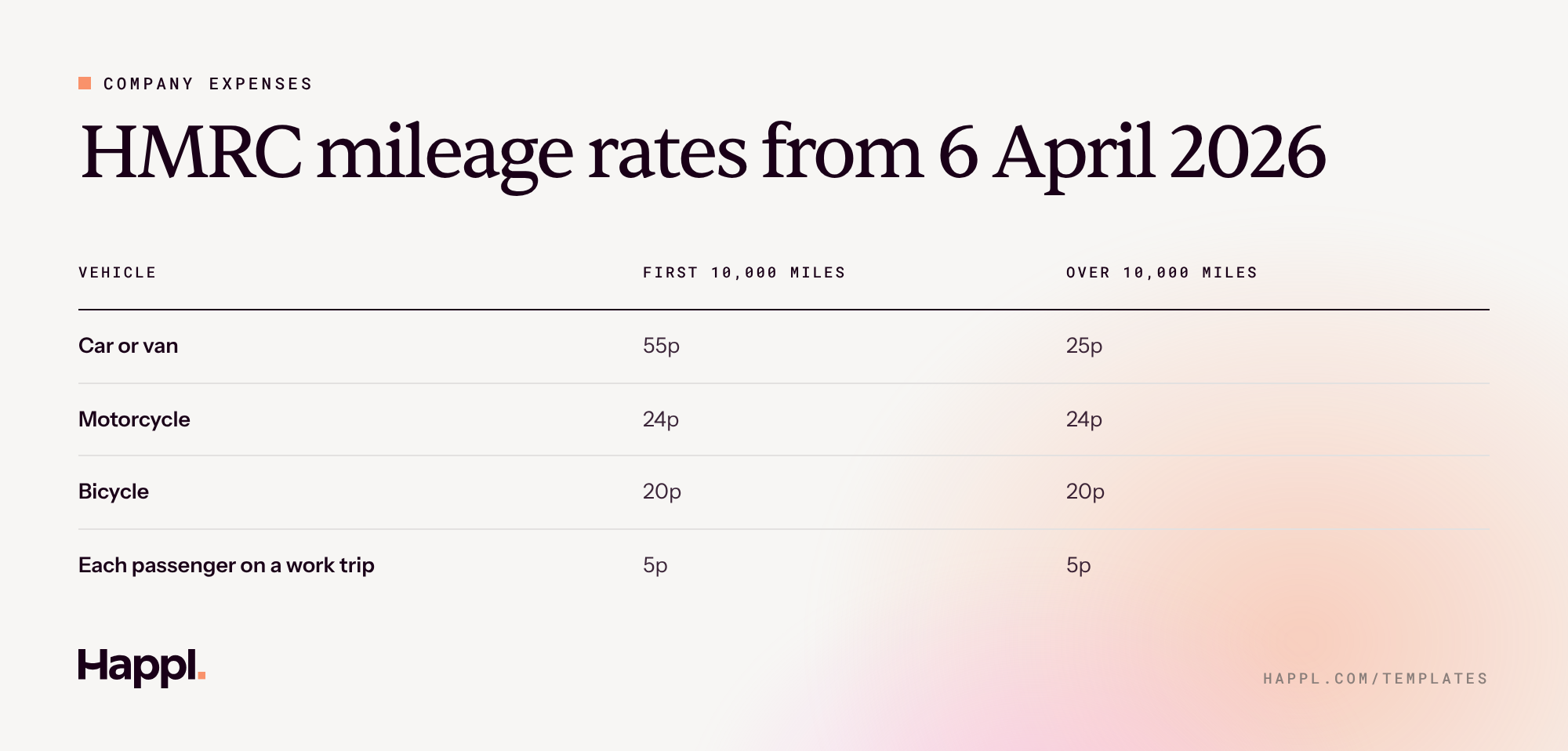
You don't have to pay the full rate. If you pay less, your employee can claim tax relief on the difference from HMRC. If you pay more, the extra is taxed as pay.
The usual commute doesn't count. Business mileage is travel for work, such as visiting a client or going to a different office for the day.
Working from home costs
Since April 2026, employees can no longer claim tax relief from HMRC for working from home. That makes any payment from you more valuable.
You can still pay up to £6 a week tax-free, without asking for bills, if someone has to work from home. That covers extra heating, electricity and similar costs. It doesn't apply when working from home is just their preference.
FAQ
What is the HMRC mileage rate for 2026?
55p a mile for the first 10,000 business miles in a car or van, and 25p after that. The rate applies from 6 April 2026.
Do employers have to pay expenses?
There's no general legal duty, but unpaid work costs can take someone's pay below the minimum wage. Most employers pay back reasonable costs and set the limits in a policy.
Are expenses taxable?
Paying back genuine business costs is tax-free and doesn't need reporting to HMRC. Flat allowances that aren't tied to real costs are taxed as pay.
Can you pay a working from home allowance tax-free?
Yes, up to £6 a week without evidence, if the employee has to work from home. Higher amounts need evidence of the extra costs.
How long do employees have to claim expenses?
The law doesn't set a deadline, so set one in your policy. 30 to 60 days after the cost is common and keeps claims accurate.
Do you need receipts for every expense?
Ask for a receipt for every claim except mileage, where a record of the journey does the same job. Receipts show HMRC the cost was real.



Offer true flexibility to your team today
See how Happl runs spend allowances at scale, with eligibility, spend controls and payroll reporting automated across every market you operate in.