What is a benefits operating system?
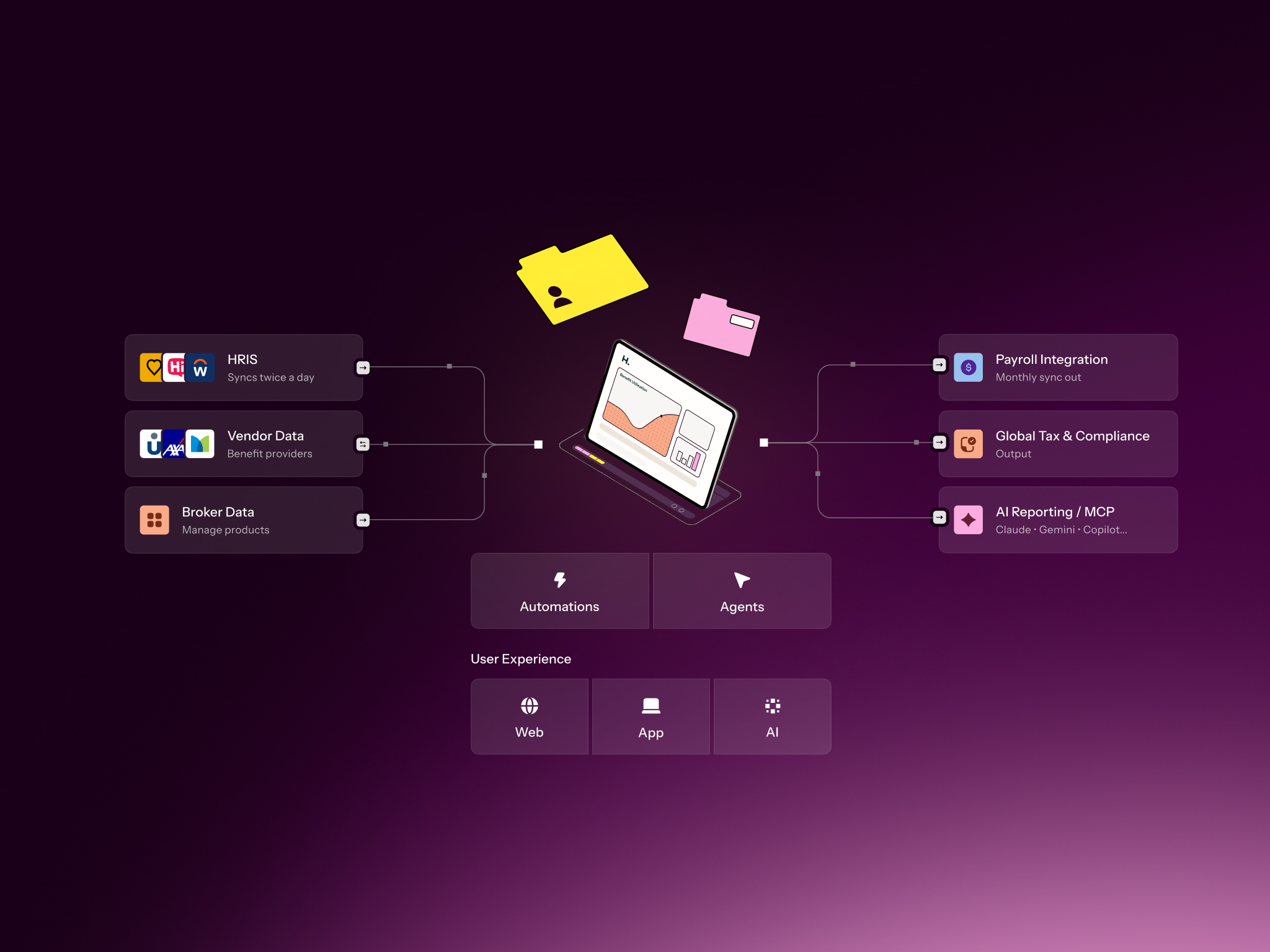

Happl's BenefitsOS is a new approach to employee benefits. It's a benefits operating system: one connected system your benefits run on, linked to your providers, payroll, HR tools and AI tools.
Until now, benefits have been hard to run that way. They sit across many providers, countries and payroll runs, and the data usually leaves the benefits platform as files and exports. When finance asks what a benefit costs, or a manager asks what someone is covered for, someone in HR exports a report and sends it on.
But what really is a benefits operating system, and how does it change things for you?
What is a benefits operating system?
A benefits operating system is a connected, intelligent system to run benefits the way that works for you. It handles the admin, keeps your benefits data moving and makes it available wherever you need it.
Think of it like your phone or laptop. You never open the operating system, but it's the reason everything else works together. Your calendar and contacts are already there when an app needs them, and you don't copy anything between them.
A benefits operating system does that job for benefits. Every benefit, provider, payroll deduction and report sits in one connected layer, and the systems around it can use what's there. That's what makes it an operating system, not another platform to log in to.
Behind it are a few simple ideas. Benefits should fit how people already work, so teams can create the system that works for them. Once a benefit is set up, it should run automatically, with people stepping in only when an approval or a decision needs them. And your benefits data should be connected to the platforms you use and available wherever you need it, not sit inside one platform waiting for someone to export it.
How BenefitsOS works today
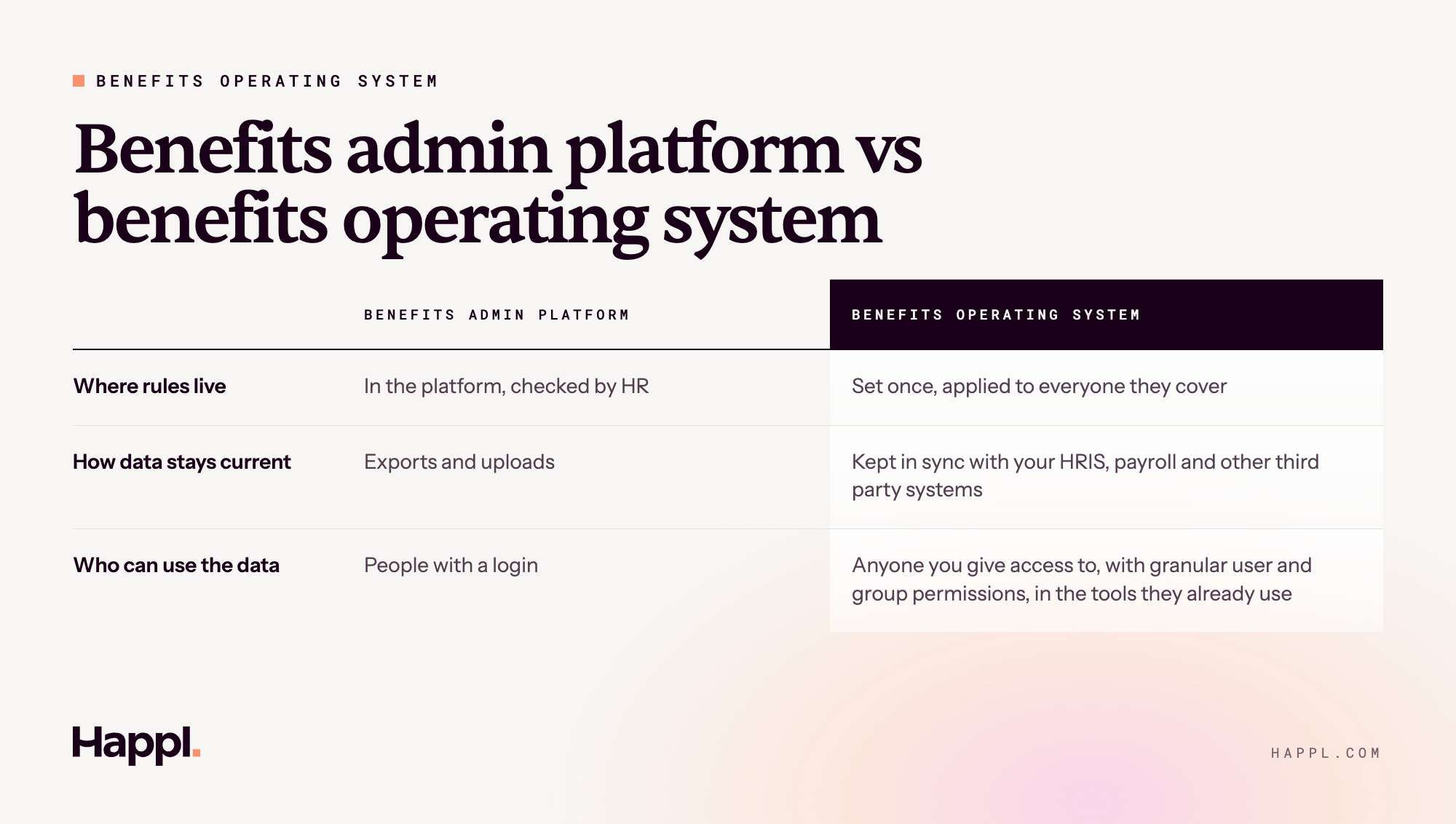
BenefitsOS puts those ideas into practice. It connects to more than 100 HRIS and payroll platforms and syncs with your HRIS multiple times a day, so when someone joins, leaves or moves country, their benefits update without anyone touching the admin. HR and payroll always work from the same picture.
From there, a rules engine works out who is eligible for what in each market, and keeps it right as people join, move and leave. You set each benefit up once, and it looks after itself.
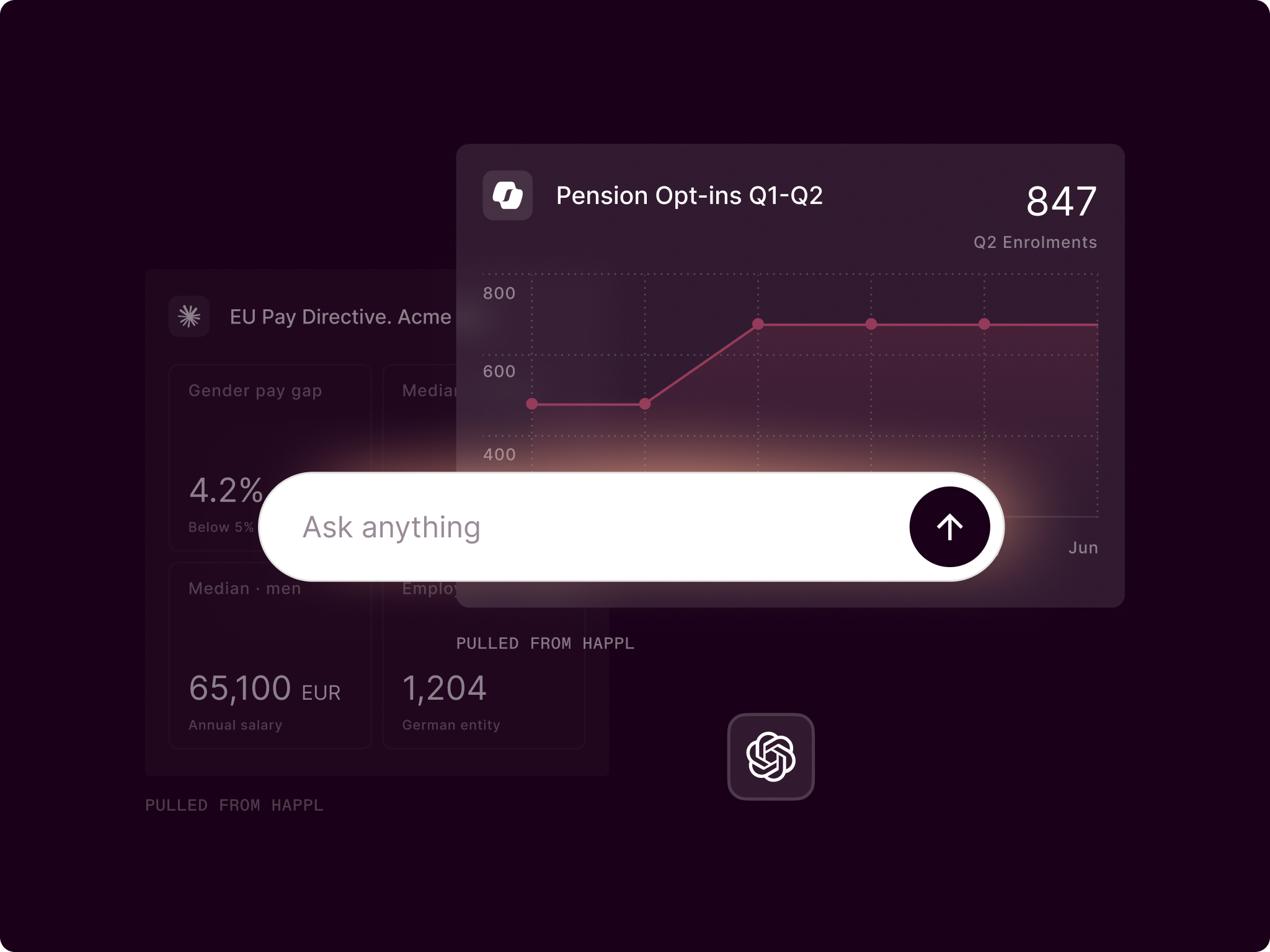
Because the data stays current, it can also come to you, wherever you're working. With Happl MCP, you can ask Copilot, Claude, ChatGPT or Gemini how many employees in Poland have medical cover and what it costs, and the answer comes back from live Happl data in the chat you already have open. Read more about Happl MCP.
And all of it fits around how you work, from the homepage your people see to the way each benefit is set up, without a requiring a big development project to implement something new.
What changes for HR teams and employees?
For HR teams, this all changes where your time goes. Eligibility runs on the rules you set, so nobody checks each person's options one at a time. When finance asks what a benefit costs, you can gets the answer you need fast, right from the AI tools you're already working in.
For employees, benefits become something they can look into on their own. They see what they have and what it costs, and when a question comes up, they can ask Happl AI about their own cover and get an answer straight away. They don't have to email HR and wait to find out what they're entitled to.
What comes next for BenefitsOS?
BenefitsOS keeps upgrading, the way the operating system on your phone does. Each version takes on more of the admin and connects into more of the systems you need to run benefits well. And we're only getting started.
Where it's heading is simple: benefits that are easy to manage, for teams of every size. It shouldn't matter how many countries you operate in or how complex your benefits are. Launching benefits in a new country should take minutes rather than months, and once they're set up, they run without you needing to micromanage them.
That's what makes BenefitsOS a foundation. Your benefits data stays yours and stays connected, so the rest of your HR stack can build on it too, and benefits become part of how the whole company runs.
See what BenefitsOS looks like for your own benefits in our platform overview.
FAQ
Does a benefits operating system replace my HRIS or payroll?
No. It sits alongside them and keeps them supplied with benefits data.
Is it only for large employers?
No. The need grows with countries and providers, but a smaller team gets the same rules and the same connected data.
What is an MCP?
MCP, the Model Context Protocol, is a standard way for AI tools to connect to other software. It lets you ask a question in Claude or Copilot and get the answer from your Happl data. Read more about Happl MCP.
Does it work across countries?
Yes. The rules engine works out who is eligible for what in each market, and BenefitsOS holds every benefit, provider and payroll deduction in one connected layer, in every country you operate in.



Offer true flexibility to your team today
See how Happl runs spend allowances at scale, with eligibility, spend controls and payroll reporting automated across every market you operate in.